From fearing a winless campaign to securing back-to-back victories, Max Verstappen has explained the technical breakthrough behind Red Bull’s remarkable resurgence, and why he had no advance knowledge of the team’s recovery when committing his future to the squad.
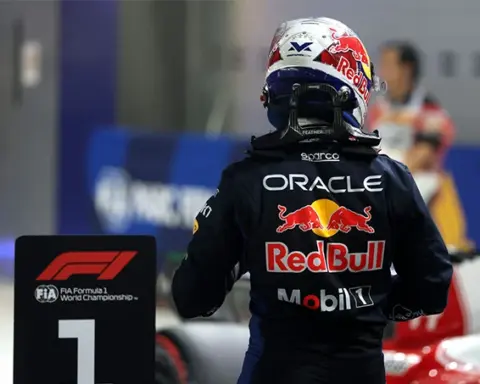
Red Bull’s 2026 Formula 1 campaign has undergone a dramatic transformation in a matter of weeks. After struggling for competitiveness during the opening stages of the championship, the team has returned to the front of the grid, with Max Verstappen narrowly missing victory in Azerbaijan before winning consecutive Grands Prix in Malaysia and Singapore.
The turnaround has been particularly striking given Verstappen’s concerns earlier in the season. As recently as the Italian Grand Prix at Monza, the four-time world champion considered the possibility of completing 2026 without a single victory.
That prospect now appears increasingly distant.
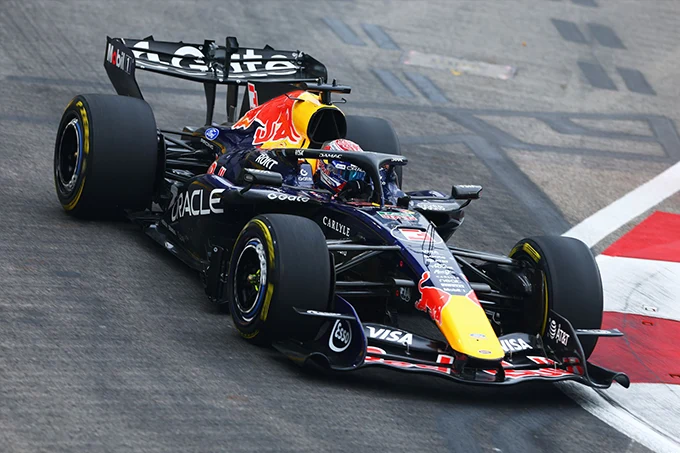
Upgrades introduced at Baku have significantly improved the RB22, restoring the confidence and consistency Verstappen had been missing throughout much of the campaign. However, the Dutchman insists Red Bull’s recovery was not something he anticipated when negotiating his contract extension.
From a difficult start to consecutive victories
Red Bull began the 2026 season well below its traditional competitive standards, at times finding itself fourth in the competitive order and battling teams such as Haas and Alpine rather than challenging consistently for victories.
The RB22’s unpredictable handling proved particularly troublesome, preventing Verstappen from extracting its full performance and leaving the team struggling to compete with the championship’s leading contenders.
By Monza, Verstappen was openly acknowledging the possibility of a winless season.
The situation began to change following a package of developments introduced at the Azerbaijan Grand Prix.
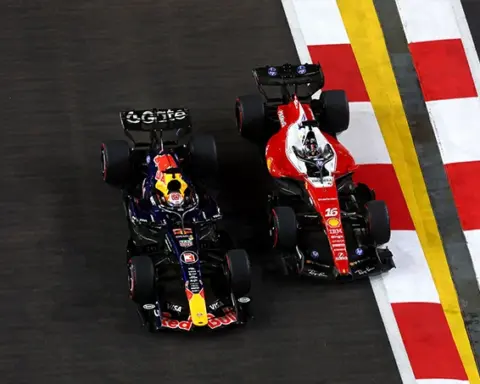
Verstappen came close to victory in Baku before securing wins in Malaysia and Singapore, completing a run of three highly competitive race weekends that underlined the scale of Red Bull’s progress.
The improvements have not simply delivered additional outright performance. They have fundamentally changed how the car behaves, allowing Verstappen to drive with greater confidence and consistency.
Verstappen denies knowing Red Bull’s recovery was coming
The timing of Red Bull’s resurgence has also raised questions about Verstappen’s long-term commitment to the team.
Earlier in the season, the RB22’s struggles had fuelled speculation about whether the Dutchman might consider leaving Red Bull for a rival organisation.
However, during the Dutch Grand Prix weekend at Zandvoort, Verstappen revealed that he had been closer to contemplating an early retirement from Formula 1 than pursuing a move elsewhere.
Around the same period, it was confirmed that his existing long-term agreement with Red Bull had been renegotiated and extended by a further two years.
With the team now winning races again, the timing of that agreement appears particularly favourable. Nevertheless, Verstappen rejected suggestions that he had received advance assurances about the effectiveness of the upgrades subsequently introduced in Azerbaijan.
“No, not really,” Verstappen said when asked whether he had anticipated the team’s rapid improvement.
“It was more about discussing the future and, of course, the ideas about how the team was going to improve.”
Those discussions, rather than any certainty about an immediate performance breakthrough, were what convinced him.
“And I liked those ideas. It’s not like they really needed to convince me or anything. They’re just the normal discussions you have with your team.”
Verstappen also emphasised the importance of his existing relationship with Red Bull.
“For me, it’s been really enjoyable working with this team. Naturally, with the progress we’ve made, it’s a nice bonus, because fighting at the front is obviously much more satisfying.”
A more predictable RB22 has transformed Verstappen’s confidence
Although the Azerbaijan upgrades have improved the RB22’s competitiveness, Verstappen believes the most important development has been a fundamental improvement in its balance and predictability.
Earlier in the championship, the car’s inconsistent behaviour made it difficult to anticipate how it would respond when entering corners.
That uncertainty prevented Verstappen from consistently approaching the limit, as the available grip and handling characteristics could change unexpectedly.
“The big change with our car is that it has simply become much more predictable and balanced,” Verstappen explained.
“At the beginning of the year, very often I didn’t know what was going to happen when approaching a corner.”
The Dutchman described the early-season behaviour of the RB22 as particularly frustrating.
“There were a lot of strange things happening with the car back then.”
For a driver whose performance depends on precisely understanding the available grip, that unpredictability represented a substantial limitation.
“That’s why you could never really drive at the limit, because you didn’t know where that limit was, or because it had suddenly moved.”
The recent improvements have changed that relationship between driver and machine.
According to Verstappen, knowing how the car will respond has been essential to Red Bull’s stronger performances across the last three race weekends.
“That change has made things much better over the last few race weekends. It’s simply about knowing better where the limit is and having a more predictable balance.”
The explanation suggests that Red Bull’s recovery cannot be measured solely through additional aerodynamic downforce or improved lap times. A more stable platform has also allowed Verstappen to exploit the performance already available.
Red Bull-Ford power unit earns Verstappen’s praise
Beyond the chassis improvements, Verstappen has also expressed satisfaction with the progress of Red Bull’s new in-house power unit programme, developed in partnership with Ford.
Following his Singapore victory, the four-time world champion was asked whether the performance of the Red Bull-Ford engine had exceeded his expectations.
Verstappen explained that he had deliberately avoided making predictions before the power unit made its competitive debut.
“I always remained very neutral. I didn’t try to be overly optimistic, but not negative either, because you simply cannot know. I mean, how could you know?”
Rather than speculating about the engine’s eventual competitiveness, he placed his confidence in the specialists recruited to establish Red Bull’s power unit operation.
“You trust, of course, the people who have been hired, thinking that they’re doing a good job. But I never really tried to look too far ahead.”
His approach was to wait until both the chassis and engine were ready before judging the package.
“I simply thought: let’s wait. When the car is ready, the engine will be ready too.”
Verstappen also highlighted the substantial investment Red Bull has made in developing its own engine infrastructure.
“They have the facilities needed to design a very good engine, because Red Bull has invested a lot of money in it. But honestly, I didn’t worry too much about it.”
Encouraging beginnings, but further improvements remain essential
While Verstappen is pleased with the progress achieved by Red Bull’s power unit division, he remains conscious that the project is still in its early stages.
The team has already demonstrated that its first in-house Formula 1 engine can compete successfully, but the Dutchman believes there is considerable room for further development.
“We are obviously very happy with our beginnings. Things could be much worse, as you can see elsewhere in the paddock.”
The comparison reflects Verstappen’s satisfaction with Red Bull’s initial performance, particularly given the technical complexity of entering a new Formula 1 power unit era as a manufacturer.
However, he insists the team’s recent victories have not reduced its determination to improve.
“We are very proud. But while feeling that pride, we continue to work hard, because we know there are many areas in which we can improve. That’s simply the mentality within the team.”
For Verstappen, Red Bull’s resurgence has therefore been driven by several connected developments: a more balanced and predictable RB22, an effective upgrade programme and encouraging progress from its new power unit operation.
Just weeks after the prospect of a winless season appeared realistic, Red Bull has returned to winning races.
And although Verstappen maintains he did not foresee such a rapid recovery when extending his commitment to the team, the improvement has reinforced his satisfaction with the direction Red Bull is taking.