Nearly five years after Formula 1’s controversial 2021 championship finale, former Red Bull team principal Christian Horner has praised Lewis Hamilton’s reaction to losing the title while accusing Mercedes of using its media influence to shape the controversy. Horner has also revealed how he turned down an opportunity to lead Mercedes before Toto Wolff’s arrival.
Horner reflects on Formula 1’s controversial 2021 title decider
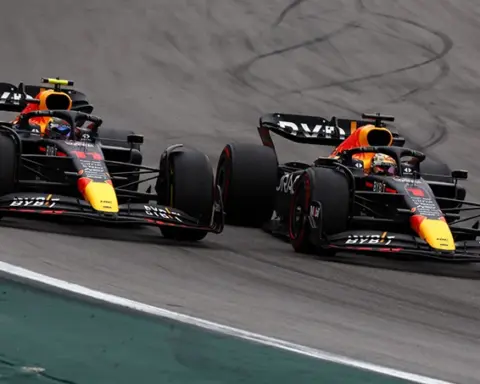
Christian Horner has revisited the dramatic conclusion to the 2021 Formula 1 World Championship, offering fresh insight into the events surrounding Max Verstappen’s first title and the extraordinary reaction that followed.
Speaking on the High Performance Podcast while promoting his memoir Drive, the former Red Bull team principal reflected on the final laps of the Abu Dhabi Grand Prix, the conduct of Lewis Hamilton and the increasingly hostile relationship between Red Bull and Mercedes.
Hamilton had appeared on course to secure a record eighth World Championship after controlling much of the race. However, a late Safety Car intervention following Nicholas Latifi’s accident dramatically altered the outcome.
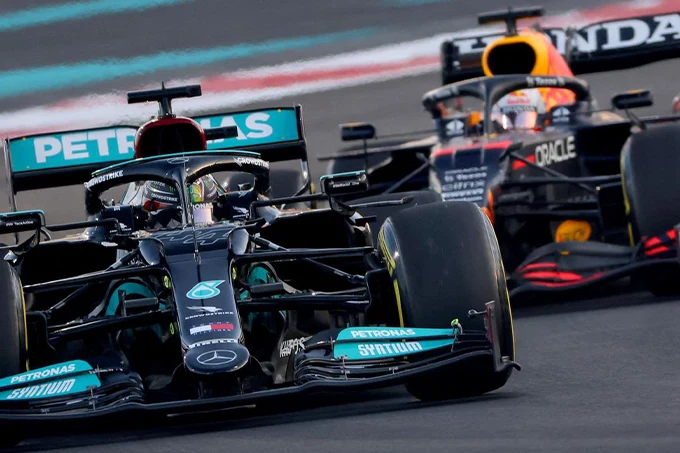
Then-FIA race director Michael Masi allowed only selected lapped cars to overtake the Safety Car, placing Verstappen directly behind Hamilton for a final-lap restart.
With fresh tyres against Hamilton’s older rubber, Verstappen overtook the Mercedes driver to claim victory and the championship.
The decision remains one of the most disputed moments in modern Formula 1.
Horner, however, believes the outcome must now be accepted as part of the sport’s history.
He recalled how Verstappen surprised Hamilton by making his decisive move at a corner where the Mercedes driver might not have expected an attack, rather than waiting until the end of the straight.
Verstappen maintained the position to the chequered flag, triggering an extraordinary reaction among supporters of both drivers.
Hamilton’s reaction earned Horner’s lasting respect
Despite the intensity of the championship rivalry, Horner reserved particular praise for Hamilton’s conduct immediately after losing the title.
The seven-time World Champion had led for much of the race before seeing his advantage disappear following the Safety Car intervention.
Horner acknowledged the emotional impact such a defeat must have had, particularly given how close Hamilton had been to achieving an unprecedented eighth championship.
Nevertheless, Hamilton approached Verstappen and the Red Bull team after the race to offer his congratulations.
Horner recalled that Hamilton shook hands with both Verstappen and himself, while Hamilton’s father, Anthony, also congratulated the team.
He described their conduct as remarkable given the circumstances.
According to Horner, witnessing Hamilton maintain his composure at such a difficult moment significantly increased his respect for the British driver.
The former Red Bull boss contrasted that personal display of sportsmanship with the fierce reaction that developed around the championship result.
He noted that Dutch supporters celebrated Verstappen’s triumph with enormous enthusiasm, while many Hamilton fans believed their driver had been unfairly deprived of the title.
Social media amplified those opposing interpretations, turning the conclusion of the championship into a deeply polarising controversy.
Horner accuses Mercedes of influencing the public narrative
Although Horner praised Hamilton personally, his assessment of Mercedes’ response was considerably more critical.
He argued that the circumstances of the championship finale created competing narratives, with Red Bull celebrated by Verstappen’s supporters and condemned by those who believed Hamilton had suffered an injustice.
Horner suggested that Mercedes possessed a powerful communications operation capable of influencing how the controversy was presented and discussed.
He described the team’s media organisation as extensive, with experienced personnel who understood how to apply pressure and influence the wider Formula 1 environment.
In Horner’s view, this contributed to Red Bull being portrayed as the villain by sections of the audience, particularly among Hamilton’s supporters.
He acknowledged that the opposite perception existed in the Netherlands, where Verstappen and Red Bull were celebrated as heroes.
These remain Horner’s interpretation of Mercedes’ response rather than an independently established account of a coordinated media campaign.
The rivalry intensified over direct contact with race control
Horner also traced the deterioration in relations between Red Bull and Mercedes to events earlier in the 2021 season.
He recalled discovering during the Spanish Grand Prix weekend in Barcelona that Mercedes team principal Toto Wolff was communicating directly with race director Michael Masi.
The exchanges became apparent to Horner when communications involving race control began being broadcast.
Horner said he was surprised that Wolff could speak directly to the official responsible for overseeing the race, believing such communication placed pressure on the person effectively acting as the referee.
He contrasted that situation with his own experience under former FIA race director Charlie Whiting.
According to Horner, he had never spoken directly to Whiting in 15 years, with communications traditionally passing through the team’s sporting director.
After learning of Wolff’s direct access to Masi, Horner instructed his own team manager to establish a similar communication link.
He acknowledged that once teams recognised the opportunity to defend their interests through direct communication, they were naturally inclined to use it.
Horner believes those exchanges contributed to the escalating tensions between Mercedes and Red Bull throughout the championship battle.
Horner admits Hamilton had the faster car in Abu Dhabi
Despite Red Bull ultimately securing the Drivers’ Championship, Horner acknowledged that Mercedes had enjoyed the stronger performance during most of the Abu Dhabi finale.
He conceded that Hamilton had the faster car and was pulling away from Verstappen for approximately 80 per cent of the race.
As the laps passed, Horner began considering how he would address the Red Bull team after what appeared likely to be a painful defeat.
Mercedes had already secured the Constructors’ Championship, and Verstappen appeared set to lose the Drivers’ title at the final race.
Horner recalled the frustration of facing that outcome after an intense season in which Red Bull had committed everything to challenging Mercedes.
He nevertheless highlighted Sergio Perez’s contribution during the race.
The Mexican played an important supporting role by delaying Hamilton and helping Verstappen reduce the gap, while also forcing Mercedes to consider whether a strategic response was necessary.
Horner praised Perez’s performance as exceptional, emphasising how effectively he had supported his teammate during the championship decider.
Latifi’s crash changed Red Bull’s championship prospects
The decisive turning point came when Nicholas Latifi crashed, triggering a late Safety Car.
Horner explained that Red Bull immediately recognised the opportunity to bring Verstappen into the pits for fresh tyres.
With the championship apparently slipping away, the team had little to lose by taking the risk.
Mercedes, meanwhile, faced a difficult strategic decision.
Keeping Hamilton on track would preserve his position at the front, while stopping for tyres could surrender the lead to Verstappen.
Mercedes elected not to pit Hamilton, anticipating that the race might finish behind the Safety Car.
Horner considered that decision a gamble, arguing that the accident did not initially appear particularly severe and that a nearby escape road could potentially assist with clearing the scene.
The situation became more complicated when race control initially announced that lapped cars would not be permitted to overtake the Safety Car.
That instruction was subsequently changed, with only the lapped cars separating Hamilton and Verstappen allowed to pass.
The decision enabled Verstappen to line up immediately behind Hamilton for the final-lap restart.
Horner maintained that a championship should not ideally be decided through such circumstances, while arguing that sufficient time existed to allow all lapped cars to regain their lap.
He also defended Masi’s decision as one he believed fell within the race director’s authority under the regulations, while acknowledging that allowing only selected cars to unlap themselves was an unprecedented procedure.
That remains Horner’s interpretation of the decision, which was central to the subsequent controversy.
Verstappen ultimately capitalised on his tyre advantage to overtake Hamilton and secure the championship.
Horner reveals Niki Lauda’s offer to lead Mercedes
Beyond the events of 2021, Horner also revealed how his career could have taken a very different direction almost a decade earlier.
In his memoir Drive, the former Red Bull team principal recounts being approached by three-time World Champion Niki Lauda about taking charge of Mercedes’ Formula 1 operation.
The approach came around Christmas 2012, shortly after Red Bull had secured its third consecutive Drivers’ and Constructors’ Championship double with Sebastian Vettel.
Mercedes was seeking to strengthen its leadership structure as it prepared to challenge for championships.
Lauda, who held a non-executive role within the organisation, identified Horner as a potential candidate to lead the team.
The discussions followed Mercedes’ successful recruitment of Hamilton from McLaren, a move officially announced in September 2012.
Horner revealed that he had previously held discussions with Hamilton when the British driver was considering leaving McLaren.
However, he ultimately decided against pairing Hamilton with Vettel at Red Bull, where the German was already a three-time World Champion.
Instead, Horner directed Lauda towards Hamilton as a potential Mercedes signing.
Several months later, Lauda attempted to recruit Horner himself.
Horner rejected a lucrative Mercedes proposal
Horner recalled being surprised when Lauda arrived at his home to discuss the possibility of joining Mercedes.
During their conversation, the Austrian presented a series of substantial financial figures.
Horner quickly realised that the numbers represented the remuneration Mercedes was prepared to offer him to take charge of its Formula 1 team.
Lauda argued that Red Bull would never be able to match the financial package Mercedes could provide.
Despite the attraction of the offer, Horner decided to remain with Red Bull.
He explained that his loyalty to team founder Dietrich Mateschitz and the organisation they had built together outweighed the financial incentive.
Horner thanked Lauda for the proposal but made clear that he would not leave Red Bull for Mercedes.
His decision allowed him to continue overseeing Red Bull’s championship-winning operation.
In 2013, the team secured a fourth consecutive Drivers’ and Constructors’ Championship double, completing its period of dominance before Formula 1 introduced hybrid power units in 2014.
Mercedes turned to Wolff after Horner’s refusal
Following Horner’s decision to remain at Red Bull, Mercedes pursued a different leadership structure.
Toto Wolff joined the organisation in 2013, initially working alongside team principal Ross Brawn.
After Brawn’s departure, Mercedes reorganised its senior management responsibilities for the 2014 season.
Wolff assumed responsibility for much of the team’s political and commercial leadership, while Paddy Lowe focused on technical management.
That structure accompanied Mercedes’ emergence as Formula 1’s dominant force at the beginning of the hybrid era.
The German manufacturer went on to secure seven consecutive Drivers’ and Constructors’ Championship doubles from 2014, with its first three achieved under the Wolff-Lowe leadership arrangement.
When Lowe departed ahead of the 2017 season, Wolff subsequently assumed a more conventional team principal role.
Horner’s refusal therefore became a significant turning point in the leadership histories of both organisations.
Red Bull retained the figure who had overseen its initial championship successes, while Mercedes established the management structure that would underpin one of Formula 1’s most successful periods.
A rivalry that defined an era of Formula 1
The possibility of Horner leading Mercedes adds another dimension to the rivalry that eventually developed between the two teams.
Had he accepted Lauda’s proposal, the leadership landscape of Formula 1 could have been substantially different.
Instead, Horner and Wolff became opposing figures in one of the sport’s most intense championship battles, culminating in the extraordinary events of Abu Dhabi 2021.
Nearly five years later, Horner continues to defend Red Bull’s actions while questioning Mercedes’ response to the controversy.
Yet his reflections also distinguish between the institutional rivalry and the conduct of the drivers involved.
While Horner remains critical of Mercedes’ communications strategy and the pressure surrounding race control, he has made clear that Hamilton’s reaction to losing the championship left a lasting impression.
For the former Red Bull team principal, Abu Dhabi 2021 remains both a defining moment in Verstappen’s career and an occasion that strengthened his personal respect for the driver Red Bull had spent the season trying to defeat.