Mercedes, McLaren and Racing Bulls question Williams’ F1 cost cap proposal
James Vowles wants smaller teams to receive greater spending flexibility, but rival team bosses remain unconvinced by a championship-based adjustment system.
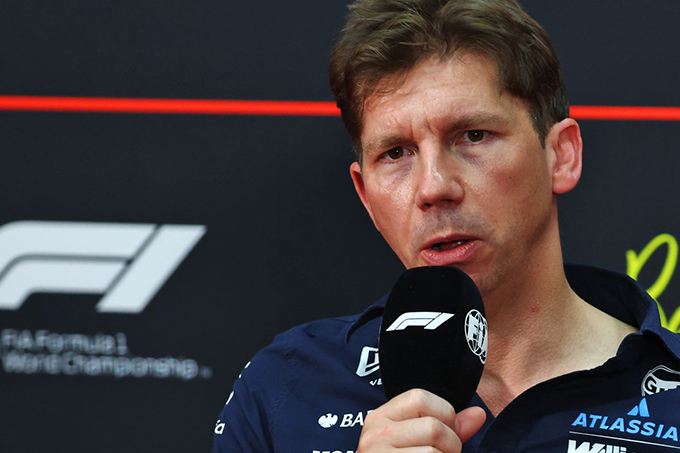
Williams team principal James Vowles is facing resistance from Mercedes, McLaren and Racing Bulls over his proposal to reform Formula 1’s cost cap regulations, with several leading figures questioning whether additional spending allowances based on championship position would genuinely improve competitiveness.
Vowles believes the current financial regulations have unintentionally reinforced the historical advantages enjoyed by Formula 1’s wealthiest teams.
Although the cost cap was introduced to reduce the gap between leading and midfield competitors, the Williams boss argues that restrictions on infrastructure investment have made it harder for smaller teams to catch up.
Teams that invested heavily in facilities before the cost cap was introduced continue to benefit from those investments, while organisations such as Williams face greater challenges modernising their infrastructure within the current financial framework.
Williams proposes a sliding cost cap allowance
Vowles has suggested introducing a system under which lower-ranked teams would receive additional spending allowances, similar to the existing aerodynamic testing restrictions that provide greater wind tunnel and computational fluid dynamics (CFD) resources to less competitive teams.
The proposal could potentially take effect in 2027 if Red Bull and Racing Bulls support it.
Williams has reportedly already secured the four votes required for the change to be introduced in 2028, making the position of the Red Bull organisation particularly significant.
However, the proposal has received a cautious response from several rival team principals.
Wolff questions championship-based spending adjustments
Mercedes team principal Toto Wolff acknowledged the difficulties facing Williams but questioned whether introducing additional financial allowances based on championship position would be the right approach.
Wolff argued that the cost cap had already required major teams to restructure their operations while allowing smaller organisations to expand.
« The reason the cost cap was introduced was to balance performance between the smaller and larger teams, » Wolff explained.
« We had to restructure quite drastically, while other teams were below the cap and were able to recruit. »
Although he recognises the economic benefits of the regulations, Wolff believes the current system has created another problem: Formula 1’s ability to compete for highly qualified technical staff.
He warned that salary restrictions could make the championship less attractive to engineers and specialists who might otherwise pursue more lucrative careers in technology, finance or investment banking.
Wolff would therefore prefer additional flexibility specifically for salaries rather than a general increase in development spending.
He suggested that a dedicated allowance could help teams retain highly skilled employees without simply increasing expenditure on new aerodynamic components.
However, he acknowledged that smaller teams might oppose such a measure if it allowed larger organisations to expand their recruitment budgets.
Mercedes sympathetic to Williams’ infrastructure concerns
Wolff was more receptive to the difficulties surrounding capital expenditure, particularly given Williams’ long history of underinvestment in its facilities.
Under the revised financial regulations, capital expenditure and operational expenditure have become more closely integrated, requiring teams to account for infrastructure investments within their broader spending limits.
Wolff acknowledged that the changes have created different consequences depending on a team’s previous investment decisions.
« I have a lot of sympathy for a team like Williams and for James, who is very intelligent, » he said.
However, he stressed that any changes must preserve the balance established by recent regulatory reforms.
Wolff was particularly opposed to introducing a mechanism resembling the Balance of Performance system used in other motorsport championships.
« Personally, I don’t like the concept of adjustments based on certain positions, » he explained.
« Balance of Performance, for me, is like a red rag to a bull. »
He argued that Formula 1 already has mechanisms designed to help struggling teams, including aerodynamic testing restrictions and power unit development provisions.
The Mercedes boss questioned whether the championship needed another system linking financial allowances to competitive performance.
Brown highlights McLaren’s recovery as evidence of progress
McLaren CEO Zak Brown adopted a similarly cautious position, arguing that Formula 1’s existing regulations have already helped create a more competitive championship.
Brown emphasised that financial resources and infrastructure are not the only factors determining success.
« The biggest difference between racing teams is the people and the culture, » Brown explained.
He pointed to McLaren’s own recovery as evidence that a team can become successful without possessing the largest facilities or operating as a factory engine manufacturer.
Brown noted that McLaren had overcome those perceived disadvantages through the strength of its organisation.
He also defended the decision to combine capital and operational expenditure within the financial regulations, arguing that teams should be required to make strategic choices about where they invest.
According to Brown, the championship has already become considerably more competitive, with several teams capable of winning races.
Nevertheless, he maintained that McLaren remains open to discussing potential improvements.
Wolff uses McLaren’s success to challenge further reform
Wolff subsequently pointed to McLaren as an example of a team that had successfully recovered from financial and competitive difficulties without requiring a fundamentally different cost cap system.
He praised the Woking-based organisation for rebuilding itself and returning to championship-winning form.
Brown interrupted to remind Wolff that McLaren had won two championships, prompting a light-hearted exchange between the two executives.
Wolff then broadened his argument, pointing to the competitiveness of Racing Bulls and Alpine as further evidence that the current regulations allow teams to make progress.
He acknowledged the particular challenges facing Williams, including its traditional manufacturing infrastructure and the difficulties involved in modernising its operations.
However, he remained unconvinced that greater capital expenditure flexibility, particularly when linked to championship position, would deliver a substantial competitive benefit.
Racing Bulls opposes major cost cap changes
Racing Bulls team principal Alan Permane expressed the clearest opposition to a significant restructuring of the cost cap.
Permane argued that the existing financial and aerodynamic regulations have helped bring the field closer together, particularly as technical rules remain stable over longer periods.
He credited the aerodynamic testing restrictions with providing gradual adjustments that help less competitive teams improve without fundamentally altering the championship’s financial structure.
« We would not support a radical change to the cost cap regulations that would allow teams to start spending significantly larger amounts of money, » Permane said.
He insisted that the existing framework has served Formula 1 well and should not be substantially altered.
While acknowledging that minor adjustments might be appropriate, Permane argued that teams already have mechanisms available to undertake major infrastructure projects.
He explained that even a $100 million investment could be accommodated under the regulations, provided the expenditure was amortised over several years.
« The mechanism already exists, » he said.
Red Bull’s position could prove decisive
Racing Bulls’ stance could be crucial to the future of Williams’ proposal, particularly if the changes are to be introduced as early as 2027.
With the Faenza-based team’s position closely aligned with the broader Red Bull organisation, securing support for an accelerated introduction appears challenging.
Mercedes and McLaren have stopped short of rejecting every possible adjustment, but both remain cautious about introducing financial advantages based on championship position.
The debate highlights a fundamental disagreement over how Formula 1 should balance financial sustainability with competitive equality.
For Williams, the priority is creating greater opportunities for teams with historically limited infrastructure investment to close the gap.
For its rivals, the concern is that further adjustments could undermine a regulatory framework they believe has already improved the championship’s competitiveness.
With discussions continuing, the future of Vowles’ proposal will depend on whether the teams can agree on a system that addresses infrastructure disparities without fundamentally changing the principles of Formula 1’s cost cap.