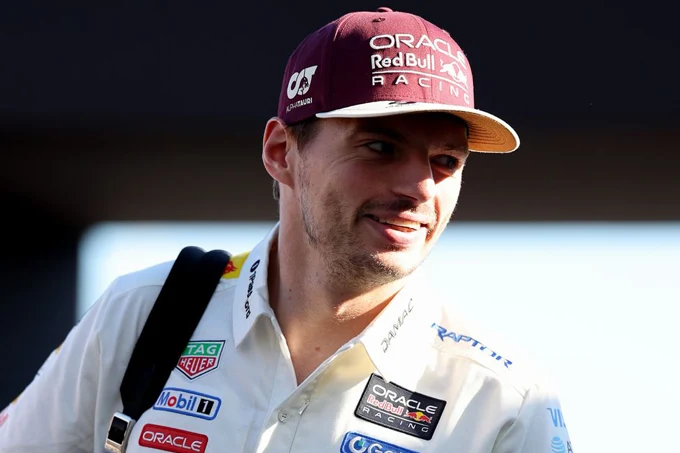
Max Emilian Verstappen was born on 30 September 1997 in Hasselt, Belgium, into a household completely devoted to the relentless pursuit of international motorsport excellence.
His father, former Formula 1 driver Jos Verstappen, immediately instilled the uncompromising standards and unforgiving work ethic of the British paddock into his young son.
His mother, accomplished Belgian racer Sophie Kumpen, possessed exceptional racecraft and smoothness, having regularly defeated future grand prix winners during her own illustrious karting career.
This potent genetic combination blended paternal aggression with maternal finesse, creating a uniquely adaptable driving style that prioritised minimum corner speed and sensitive throttle application.
At just four years of age, the toddler began lapping the local Genk circuit, displaying an uncanny spatial awareness and natural understanding of mechanical grip.
Jos transformed his son’s development into a rigorous professional programme, preparing every racing engine himself inside a modest white van travelling across continental karting venues.
During freezing winters in Limburg, the youngster pounded around flooded tracks on slick tyres until his numb fingers required warming beside the family transporter exhaust.
His demanding father frequently forbade easy slipstream passes on straights, forcing Max to execute every overtaking manoeuvre inside the most challenging and narrow braking zones.
That uncompromising apprenticeship forged extraordinary mental resilience, eliminating any trace of hesitation when riding wet kerbs or defending track position against much older international competitors.
In 2013, the Dutch teenager completed an unprecedented karting season by capturing both the European KF and European KZ gearbox championships within the same year.
He crowned that remarkable campaign in France by winning the World KZ Championship at fifteen, utterly dominating a seasoned field of factory specialists with ease.
Seasoned observers from the British motorsport press immediately recognised a generational talent capable of sensing changing asphalt grip levels before even turning into an apex.
The Formula 3 Meteor and Red Bull’s Audacious Teenage Gamble
Early in 2014, Verstappen made his transition from karts to single-seater racing cars during the competitive Florida Winter Series organised across several American circuits.
Bypassing traditional entry categories entirely, he stepped directly into the prestigious FIA Formula 3 European Championship with the modest Dutch squad Van Amersfoort Racing.
Despite his total lack of aerodynamic experience, his intuitive mastery of downforce and front axle rotation stunned veteran race engineers up and down the pitlane.
Across a dramatic weekend at Spa, the fearless youngster swept all three races, showcasing sensational wheel-to-wheel control through the high-speed sweeps of the Ardennes.
Seven days later at the tricky Norisring street circuit, he delivered another devastating treble under torrential German rain, lapping seconds faster than his bewildered rivals.
His delicate feel for wet tyres on shiny painted white lines convinced Red Bull advisor Helmut Marko that he was witnessing a modern Ayrton Senna.
While rival manufacturer Mercedes offered a conventional development pathway through junior categories, Marko boldly guaranteed an immediate Formula 1 race seat with Scuderia Toro Rosso.
That August 2014 announcement sent shockwaves through Fleet Street, with several prominent British columnists questioning whether promoting a sixteen-year-old posed an unacceptable safety risk.
However, during his maiden free practice outing at demanding Suzuka just days after turning seventeen, Verstappen displayed the calm composure of a seasoned grand prix veteran.
He concluded his solitary Formula 3 campaign third overall behind champion Esteban Ocon, having amassed ten victories despite suffering multiple mechanical retirements throughout the year.
In response to his rapid ascent, the governing body swiftly revised its superlicence criteria, establishing a strict minimum age of eighteen for future Formula 1 entrants.
Consequently, Verstappen remains immortalised in the record books as the youngest driver ever to start a world championship race, a benchmark that cannot be broken.
Precocious Toro Rosso Debut and Rewriting the Rulebook in 2015
In March 2015 at Melbourne’s Albert Park, Verstappen lined up on the Australian Grand Prix grid aged just seventeen years and one hundred sixty-six days.
Although a smoky engine failure cruelly denied him points on debut, his mature tyre management during his opening stint silenced many sceptical paddock critics overnight.
Two weeks later under the oppressive tropical heat of Sepang, he qualified sixth and finished seventh, becoming the youngest points scorer in Formula 1 history.
Throughout that maiden campaign, the James Key-designed Toro Rosso STR10 boasted an agile aerodynamic chassis hampered by an underpowered and unreliable Renault hybrid power unit.
Compensating for significant straightline speed deficits, the fearless Dutchman perfected late-braking dives, committing to overtakes from distances that caught seasoned competitors completely off guard.
At Spa-Francorchamps, his breathtaking pass around the outside of Felipe Nasr through the terrifying Blanchimont corner at three hundred kilometres per hour thrilled British broadcasters.
Brilliant fourth-place finishes in Hungary and Austin demonstrated that his flamboyant racecraft was underpinned by genuine tactical intelligence and relentless consistency across entire race distances.
When ordered via team radio in Singapore to yield position to stablemate Carlos Sainz, his blunt refusal revealed a fiercely independent and ruthless competitive streak.
Fleet Street journalists praised that uncompromising mentality, drawing immediate parallels with the self-belief exhibited by young Michael Schumacher and Fernando Alonso during their early years.
He concluded his rookie campaign with forty-nine championship points, comfortably outscoring his highly rated Spanish teammate while providing electric entertainment at almost every single venue.
At the prestigious end-of-season FIA Prize Giving Gala, Verstappen collected three separate trophies, including Rookie of the Year, Personality of the Year, and Best Action.
Red Bull team principal Christian Horner knew that keeping such a generational talent confined within the junior Faenza squad would soon become completely impossible.
Instant Glory in Barcelona and Maturation at Red Bull Racing
Following a chaotic Russian Grand Prix in May 2016, Red Bull management ruthlessly promoted Verstappen to the senior Milton Keynes outfit alongside Australian Daniel Ricciardo.
During his very first weekend driving the unfamiliar RB12 chassis in Barcelona, the teenager stunned the paddock by qualifying fourth on the second row.
When both dominant Mercedes cars collided on the opening lap, a shrewd two-stop strategy placed Verstappen into the lead of the Spanish Grand Prix.
Despite relentless pressure from Ferrari veteran Kimi Räikkönen over the closing thirty laps, the youngster nursed his ageing medium tyres through the final sector flawlessly.
Aged eighteen years and two hundred twenty-eight days, he crossed the line to become the youngest grand prix winner in history, sparking global media pandemonium.
That November in torrential rain at Interlagos, he produced a wet-weather masterclass, discovering unseen grip on outer lines where experienced champions were aquaplaning off track.
After miraculously saving a lurid high-speed spin on the main straight, he charged from sixteenth to third within sixteen laps in a truly iconic drive.
Although aggressive defensive weaving under braking drew complaints from rivals and prompted regulatory clarifications, his raw speed remained undeniable throughout the 2017 championship campaign.
Overcoming frustrating early mechanical failures in 2017, he claimed commanding victories in Malaysia and Mexico, demonstrating devastating pace whenever his machinery stayed completely reliable.
However, a messy opening six races in 2018 culminated in a costly third free practice crash at Monaco, preventing him from contesting qualifying altogether.
Watching teammate Ricciardo celebrate victory in Monte Carlo proved a pivotal turning point, prompting Verstappen to recalibrate his risk assessment and refine his race preparation.
From Montreal onwards, a far more measured driver emerged, winning brilliantly in Austria and Mexico while stringing together eleven podiums across a dominant second half.
The Honda Partnership and Becoming Milton Keynes’ Undisputed Team Leader
Daniel Ricciardo’s unexpected departure ahead of 2019 coincided with Red Bull switching to Japanese engine manufacturer Honda, placing Verstappen at the centre of the project.
Embracing his status as undisputed team leader, the Dutchman worked tirelessly with engineers to resolve tricky rear aerodynamic instability on the complex RB15 chassis.
At the Red Bull Ring, after dropping to eighth at the start, he charged back to pass Charles Leclerc and hand Honda an emotional victory.
Weeks later at a soaked Hockenheimring, he survived a full spin and navigated five treacherous pitstops to triumph while rival championship contenders crashed out.
In Hungary, he finally secured his maiden Formula 1 pole position before delivering a breathtaking tactical victory at high altitude in São Paulo that November.
Finishing third in the world drivers’ standings ahead of both Ferrari cars confirmed his transformation into the most complete all-round performer on the grid.
The pandemic-delayed 2020 campaign saw Mercedes unleash the all-conquering W11, yet Verstappen relentlessly extracted every millisecond from his capricious and unpredictable Red Bull RB16.
During the Seventieth Anniversary Grand Prix at Silverstone, he defied conventional wisdom by qualifying on hard tyres and managing tyre blistering under scorching British sunshine.
While both Mercedes drivers suffered severe rubber degradation on the abrasive Northamptonshire tarmac, Verstappen controlled the pace brilliantly to claim an opportunistic and celebrated victory.
Fighting almost single-handedly against Lewis Hamilton and Valtteri Bottas, he recorded eleven podium finishes across twelve completed races, losing out only when reliability failed him.
At the Abu Dhabi season finale, he claimed pole position and led every single lap, firing a clear warning shot ahead of the following year.
His candid radio partnership with British race engineer Gianpiero Lambiase had matured into an operational benchmark admired by technical directors across the entire Formula 1 paddock.
The Titanic 2021 World Championship Duel Against Lewis Hamilton
The 2021 world championship delivered one of the most ferocious and captivating title rivalries in motorsport history, pitting Verstappen directly against seven-time champion Lewis Hamilton.
Aerodynamic floor regulations introduced over the winter hurt low-rake designs, allowing Adrian Newey’s high-rake Red Bull RB16B to challenge Mercedes right from the opening round.
After losing a tense Bahrain opener due to track limits, Verstappen bounced back immediately by muscling past Hamilton into the wet Tamburello chicane at Imola.
Conquering the streets of Monaco gave him the championship lead for the first time, before a sudden rear tyre failure robbed him of victory in Baku.
Undeterred by that high-speed blowout, the Dutchman reeled off three consecutive wins across France and two Austrian rounds, executing a brilliant two-stop undercut at Paul Ricard.
The rivalry reached boiling point at Silverstone when opening-lap contact with Hamilton at Copse Corner pitched Verstappen into the tyre barriers at fifty-one G.
After another first-corner collision ruined his Hungarian race, he delivered a flawless home victory in front of an ecstatic orange army at revitalised Zandvoort.
At Monza, further uncompromising wheel-to-wheel combat saw both title protagonists beach their cars inside the Rettifilo gravel trap, with Verstappen’s wheel resting atop Hamilton’s halo.
Despite Mercedes unlocking formidable straightline pace during the autumn flyaway races, Verstappen held off Hamilton in Austin before dominating the opening corner in Mexico City.
Following fiercely contested battles in Brazil and Saudi Arabia that tested the stewards’ patience, both drivers arrived at the Abu Dhabi finale tied on points.
Capitalising on a late safety car to pit for fresh soft tyres, Verstappen lunged past Hamilton at Turn 5 on the final lap to win.
Amidst intense paddock controversy over race control procedures, the young Dutchman was crowned his country’s maiden Formula 1 World Champion after collecting ten memorable victories.
Ground Effect Mastery and Record-Breaking Dominance From 2022 to 2023
Sweeping technical regulations for 2022 reintroduced ground-effect aerodynamics through venturi underbody tunnels, fundamentally altering how drivers generated cornering speed and managed tyre surface temperatures.
Although fuel system failures in Bahrain and Australia left him forty-six points behind Ferrari leader Charles Leclerc, the reigning champion remained remarkably calm and focused.
At Imola, Verstappen ignited his title defence with an emphatic grand slam, winning the sprint race and leading every single lap on Sunday afternoon.
As Red Bull engineers steadily shed excess weight from the RB18 chassis, the car’s sharper front end suited Verstappen’s preference for aggressive turn-in rotation.
Stunning recovery drives from tenth on the grid in Hungary and fourteenth at Spa-Francorchamps showcased a level of superiority that completely demoralised the Maranello squad.
Crowned double world champion in the rain at Suzuka with four rounds remaining, he eventually set a new record of fifteen wins in one season.
If 2022 was impressive, the 2023 campaign aboard the refined Red Bull RB19 evolved into the most statistically dominant tour de force in motorsport history.
After experimenting with engine braking and differential mappings during his defeat to teammate Sergio Pérez in Baku, Verstappen unlocked total harmony with his machinery.
Starting in Miami by winning from ninth on the grid, he embarked upon an unprecedented streak of ten consecutive grand prix victories across the summer.
His breathtaking final qualifying sector in Monaco, brushing the steel barriers three times to snatch pole from Fernando Alonso, left seasoned British commentators utterly speechless.
Winning nineteen out of twenty-two races and leading over one thousand laps, he sealed his third consecutive world title during the Saturday sprint in Qatar.
His staggering tally of five hundred seventy-five championship points was enough to win the constructors’ title single-handedly, cementing his place among the sport’s immortals.
Defending the Crown in 2024 Amid Resurgent Rivals and Adversity
The opening phase of the 2024 campaign initially suggested another procession, as Verstappen claimed four dominant victories from the first five races on the calendar.
Commanding triumphs in Bahrain, Saudi Arabia, Japan, and China masked underlying correlation issues that soon plagued the complex aerodynamic platform of the Red Bull RB20.
From May onwards, a heavily upgraded McLaren driven by Lando Norris altered the competitive landscape, turning every grand prix weekend into a ferocious tactical dogfight.
At Imola, Montreal, and Barcelona, Verstappen relied purely on individual brilliance, qualifying magic, and iron nerve to defeat faster cars and expand his points cushion.
Throughout a challenging ten-race winless streak across the European summer, internal management turbulence and Adrian Newey’s departure tested the resilience of the Milton Keynes team.
Driving with chronic understeer and mid-corner balance shifts, the champion focused on damage limitation, securing vital second places at Silverstone, Zandvoort, and under Singapore’s floodlights.
Uncompromising wheel-to-wheel clashes with title rival Norris in Austin and Mexico City polarised British pundits, demonstrating Verstappen’s ruthless willingness to exploit every sporting regulation.
His definitive answer arrived on a soaked November afternoon in São Paulo, where he delivered a performance instantly ranked alongside the greatest drives in history.
Knocked out in qualifying by an untimely red flag and forced to start seventeenth, he scythed through the spray with breathtaking precision on intermediate tyres.
Setting seventeen fastest laps in treacherous conditions after overtaking Esteban Ocon for the lead, he triumphed by nineteen seconds to break his rival’s championship challenge.
Three weeks later beneath the neon lights of Las Vegas, a composed fifth-place finish sealed his fourth consecutive Drivers’ World Championship with two rounds spare.
Joining Alain Prost and Sebastian Vettel as a four-time champion, he silenced anyone who claimed his previous titles were merely the product of superior machinery.
The Relentless 2025 Campaign and the Dramatic Abu Dhabi Finale
The 2025 season, marking the final year of the ground-effect regulatory cycle, pitted Verstappen against the formidable papaya pairing of Lando Norris and Oscar Piastri.
Although the benchmark McLaren MCL39 enjoyed superior tyre preservation across most circuits, the reigning champion dragged his temperamental Red Bull RB21 into contention through sheer willpower.
After starting the year with second place in Melbourne, he delivered an astonishing qualifying lap at Suzuka before holding off both McLarens on Sunday afternoon.
In May at Imola, a breathtaking late-braking pass around the outside of Tamburello on the opening lap laid the foundations for another clinical victory.
Mid-season setbacks, including a frustrating retirement in Austria and a ninth-place finish in Hungary, left him trailing heavily in the standings entering the summer break.
Refusing to concede his crown quietly, Verstappen ignited a sensational autumn resurgence at Monza, converting pole position into a dominant win by nineteen clear seconds.
Two weeks later on the unforgiving streets of Baku, he controlled every lap from pole before dominating the United States Grand Prix weekend in Austin.
At Interlagos, after a disastrous qualifying session left him nineteenth on the grid, he produced another miraculous charge through the pack to finish third overall.
With the title race reaching fever pitch, the Dutchman won brilliantly in Las Vegas by twenty seconds and triumphed again seven days later in Qatar.
Arriving at the Abu Dhabi decider as an outside contender, he did everything humanly possible by claiming pole position and winning his eighth race of 2025.
Despite ending the year with three consecutive victories and more wins than any rival, he fell agonisingly short behind champion Norris by just two points.
Nevertheless, respected British motorsport analysts widely hailed his four hundred twenty-one point campaign against faster machinery as the finest individual season of his entire career.
The 2026 Technical Revolution and the Enduring Legacy of a Great
The sweeping 2026 regulatory overhaul introduced active aerodynamics and heavily electrified power units, ushering in a challenging new technical era for Red Bull at Milton Keynes.
Handing the champion’s number one plate over to Norris, Verstappen reverted to his favoured number three alongside newly promoted French stablemate Isack Hadjar for 2026.
Early reliability gremlins and Mercedes’ formidable engine advantage tested his patience, bringing four frustrating retirements in China, Monaco, Silverstone, and before his home Zandvoort crowd.
Yet whenever his car reached the chequered flag, the Dutchman remained a relentless force, claiming six runner-up finishes across Canada, Austria, Belgium, Hungary, Madrid, and Baku.
His persistence paid off in October 2026 at a sweltering Sepang circuit hosting the rescheduled Bahrain round, where he converted pole into a commanding victory.
Seven days later under the humid floodlights of Marina Bay, he finally conquered the solitary active venue missing from his illustrious record by winning in Singapore.
Securing his tenth podium of the campaign in Austin that October proved that his natural speed and racecraft remain peerless regardless of shifting technical regulations.
Away from the grand prix circus, his deep dedication to virtual endurance racing with Team Redline and GT3 competition highlights an obsession with pure driving craft.
Disliking the theatrical celebrity culture and political posturing of modern Formula 1, he retains the refreshingly direct and candid demeanour of an old-school racing purist.
Technical analysts across the British press frequently marvel at his extraordinary mental bandwidth, which allows him to process strategy while balancing on the adhesion limit.
With over seventy career victories and four world crowns already secured before turning thirty, his statistical footprint stands alongside Jim Clark, Ayrton Senna, and Michael Schumacher.
Whether wrestling an unruly chassis onto pole position or controlling a wet race from the front, Max Verstappen embodies the relentless pursuit of racing perfection.